“Brown Bear‚ Brown Bear‚ What Do You See?” is a beloved children’s picture book‚ sparking imagination and early learning for generations of young readers.
The Enduring Appeal of a Classic
“Brown Bear‚ Brown Bear‚ What Do You See?” continues to captivate young minds decades after its initial publication‚ and for remarkably good reasons. Its simple‚ yet profoundly effective‚ structure lends itself beautifully to early childhood development. The book isn’t merely a story; it’s an interactive experience‚ inviting children to participate and predict what comes next.
The vibrant illustrations by Eric Carle are instantly recognizable and contribute significantly to the book’s charm. Each animal is depicted with bold colors and distinctive patterns‚ immediately grabbing a child’s attention. This visual appeal‚ combined with the rhythmic text‚ creates a truly immersive reading experience.
Furthermore‚ the book’s themes of observation and connection resonate deeply with young children as they begin to explore the world around them. It’s a gentle introduction to the concept of cause and effect‚ and a celebration of the diversity of the animal kingdom.
Authors and Illustrators: Bill Martin Jr. & Eric Carle
Bill Martin Jr.‚ a celebrated author of children’s literature‚ possessed a remarkable gift for crafting lyrical and engaging text. He focused on creating books that celebrated language and encouraged a love of reading in young children. His collaboration with Eric Carle on “Brown Bear‚ Brown Bear‚ What Do You See?” proved to be a monumental success‚ establishing a timeless classic.
Eric Carle‚ renowned for his distinctive collage-style illustrations‚ brought Martin’s words to life with breathtaking visual artistry. His use of bright colors‚ bold patterns‚ and hand-painted paper collages created a unique and captivating aesthetic. Carle’s illustrations aren’t simply decorative; they are integral to the storytelling‚ enhancing the book’s overall impact.
The synergy between Martin’s rhythmic prose and Carle’s vibrant artwork is what truly elevates “Brown Bear‚ Brown Bear‚ What Do You See?” to its iconic status. Their combined talents created a book that continues to inspire and delight generations.
Understanding the Story’s Structure
The narrative’s simple‚ yet effective‚ structure utilizes repetition and a predictable pattern‚ making it easily accessible and engaging for young children.
Repetitive Language and Pattern Recognition
A cornerstone of the book’s success lies in its masterful use of repetitive language. The phrase “Brown Bear‚ Brown Bear‚ What do you see?” is consistently echoed throughout‚ creating a comforting rhythm and predictability for young listeners. This repetition isn’t merely stylistic; it actively supports early literacy development by reinforcing language patterns and aiding in memorization.
Children quickly anticipate the recurring question and the subsequent animal and color pairing. This fosters a sense of participation and builds confidence as they begin to predict what comes next. The predictable structure allows them to focus on the new elements – the different animals and colors – rather than struggling with the overall sentence construction.
This pattern recognition is a crucial pre-reading skill‚ laying the foundation for understanding more complex narratives and grammatical structures later on. It’s a gentle introduction to the concept of sequencing and the building blocks of storytelling.
The Call-and-Response Format
“Brown Bear‚ Brown Bear‚ What Do You See?” brilliantly employs a call-and-response format‚ transforming story time into an interactive experience. The initial question posed to the brown bear immediately invites participation‚ even from very young children who may not yet be verbal.
The book naturally lends itself to a shared reading experience‚ where an adult or older sibling asks the question‚ and the child eagerly anticipates and responds with the next animal and color. This back-and-forth exchange strengthens the bond between reader and listener‚ making the story more engaging and memorable.
This interactive element isn’t just fun; it’s pedagogically sound. It encourages active listening‚ promotes vocalization‚ and builds confidence in a child’s ability to communicate. The simple‚ predictable structure makes it easy for children to join in‚ fostering a positive association with books and reading.
Building Anticipation with Each Page Turn
“Brown Bear‚ Brown Bear‚ What Do You See?” masterfully builds anticipation with each turn of the page‚ captivating young readers and keeping them eagerly engaged. The repetitive question – “What do you see?” – creates a delightful sense of suspense. Children quickly learn to anticipate the query and prepare for the reveal of the next colorful animal.
Eric Carle’s vibrant illustrations further enhance this effect. Each spread introduces a new‚ visually striking creature‚ prompting immediate curiosity and excitement. The limited text on each page focuses attention on the artwork‚ allowing children to fully absorb the image before moving on.
This carefully crafted pacing isn’t accidental; it’s a key element of the book’s success. It allows children to process information at their own speed‚ reinforcing learning and fostering a love of reading. The anticipation builds steadily‚ culminating in the heartwarming final reveal.
Exploring the Characters
“Brown Bear‚ Brown Bear‚ What Do You See?” introduces a delightful cast of animals‚ each vividly illustrated and contributing to the story’s playful rhythm.
Brown Bear: The Initial Focus
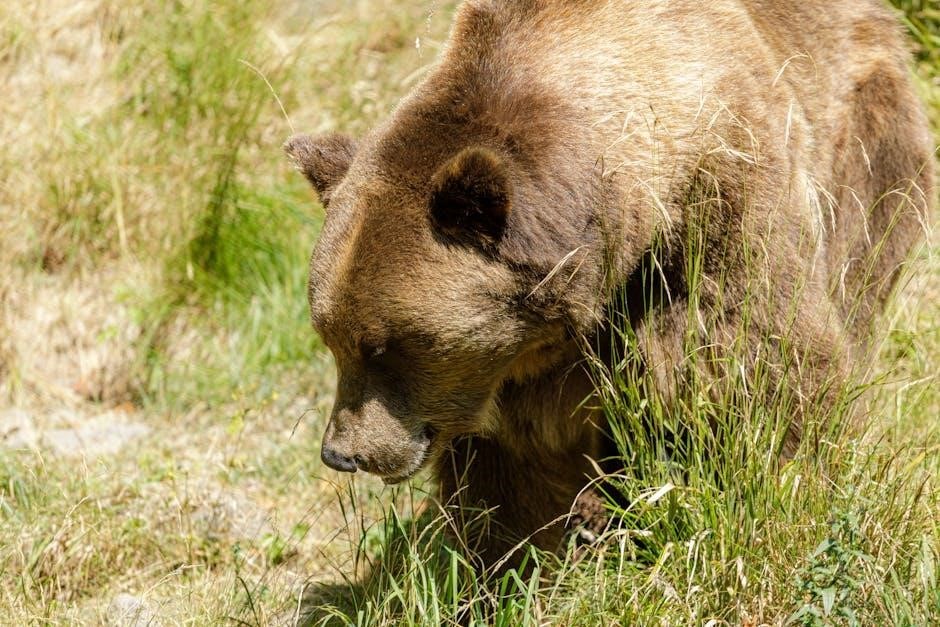
The brown bear serves as the story’s anchor‚ initiating the captivating question-and-answer sequence that drives the narrative forward. Eric Carle’s iconic illustration of the brown bear‚ created through his distinctive collage technique‚ immediately grabs a child’s attention with its bold colors and textured appearance.
This initial focus on the brown bear isn’t merely aesthetic; it’s structurally vital. The bear’s question – “Brown Bear‚ Brown Bear‚ What do you see?” – establishes the pattern that all subsequent characters will follow. This repetition isn’t accidental; it’s a key element in fostering early literacy skills‚ particularly for young children encountering books for the first time. The bear’s presence provides a comforting familiarity as the story unfolds‚ preparing readers for the parade of colorful animals to come.
The Progression of Animals
Following the brown bear‚ Bill Martin Jr.’s text introduces a vibrant sequence of animals‚ each presented with the same rhythmic question. This carefully curated progression isn’t random; it’s designed to engage children’s senses and expand their understanding of the world around them. From the striking red bird to the cheerful yellow duck‚ each animal contributes to the book’s visual and linguistic richness.
The order of the animals also subtly introduces color recognition. As the story progresses‚ children are exposed to a spectrum of hues‚ reinforcing color names alongside animal identification. Eric Carle’s masterful illustrations ensure each animal is instantly recognizable‚ aiding in vocabulary development and comprehension. This deliberate sequence builds anticipation‚ leading to the story’s satisfying conclusion.
Red Bird‚ Red Bird‚ What Do You See?
Following the brown bear’s initial inquiry‚ the narrative seamlessly transitions to the red bird. This vibrant splash of color immediately captures a child’s attention‚ building upon the established pattern of question and response. The red bird doesn’t simply exist; it actively observes‚ looking back at the brown bear and continuing the chain of sight.
This interaction is crucial to the book’s structure‚ reinforcing the call-and-response format and encouraging participation. Eric Carle’s depiction of the red bird is iconic – bold‚ simple‚ and instantly recognizable. The choice of a bird is also significant‚ introducing a creature capable of flight and a different perspective. The red bird sees the yellow duck‚ furthering the colorful journey and expanding the animal cast.
Yellow Duck‚ Yellow Duck‚ What Do You See?
The yellow duck emerges as the next link in the visual and linguistic chain‚ responding to the red bird’s observation with the same rhythmic question. This repetition isn’t monotonous; instead‚ it’s comforting and predictable for young children‚ fostering a sense of security and anticipation. Eric Carle’s illustration of the yellow duck is cheerful and inviting‚ utilizing bright‚ saturated colors that appeal to a developing visual sense.
The duck’s perspective shifts the focus again‚ introducing another animal and another color. It sees the blue horse‚ continuing the escalating pattern. This progression isn’t random; it’s carefully constructed to build momentum and maintain engagement. The simple sentence structure and consistent phrasing make it easy for children to predict what comes next‚ encouraging active participation and language development.
Blue Horse‚ Blue Horse‚ What Do You See?
The blue horse gallops onto the page‚ a striking visual contrast to the preceding yellow duck. Eric Carle’s depiction of the horse is dynamic‚ capturing a sense of movement and energy through bold lines and vibrant hues. The question‚ “Blue Horse‚ Blue Horse‚ What do you see?” is posed‚ maintaining the book’s signature call-and-response structure; This consistent pattern is crucial for reinforcing early literacy skills and building a child’s confidence in predicting outcomes.
The blue horse observes the green frog‚ continuing the chain of animals and colors. This sequential presentation isn’t merely about identifying animals; it’s about understanding relationships and building a narrative. The simplicity of the language allows children to focus on the core concepts of color and animal recognition‚ while the rhythmic text encourages memorization and recitation.
Green Frog‚ Green Frog‚ What Do You See?
The green frog appears‚ bringing a fresh burst of color to the unfolding story. Eric Carle’s illustration of the frog is wonderfully detailed‚ showcasing the texture of its skin and the alertness in its eyes. The familiar question‚ “Green Frog‚ Green Frog‚ What do you see?” reinforces the book’s predictable structure‚ allowing young readers to actively participate and anticipate the answer. This repetition is a cornerstone of early literacy development.
The green frog spots the purple cat‚ continuing the delightful progression of animals and colors. This sequence isn’t just about naming things; it’s about building a connection between observation and language. The book’s simplicity allows children to concentrate on the fundamental concepts of color and animal identification‚ while the rhythmic text promotes memorization and joyful engagement.
Purple Cat‚ Purple Cat‚ What Do You See?
The purple cat emerges as a vibrant character‚ adding another layer of color and excitement to Bill Martin Jr.’s classic tale. Eric Carle’s distinctive collage artwork brings the purple cat to life‚ with bold shapes and textures that captivate young eyes. The repeated question‚ “Purple Cat‚ Purple Cat‚ What do you see?” solidifies the book’s engaging pattern‚ encouraging children to predict what comes next and participate actively in the reading experience.
The purple cat observes the white dog‚ seamlessly continuing the chain of animals and colors. This isn’t merely about recognizing animals; it’s about fostering a connection between visual perception and verbal expression. The book’s straightforward nature allows children to focus on core concepts‚ while the rhythmic language enhances memory and joyful interaction.
White Dog‚ White Dog‚ What Do You See?
The white dog playfully joins the colorful parade‚ representing a shift in the animal sequence and reinforcing the book’s core structure. Eric Carle’s illustration of the white dog is simple yet striking‚ utilizing the stark contrast of white against the vibrant backgrounds to draw a child’s attention. The familiar refrain‚ “White Dog‚ White Dog‚ What do you see?” maintains the book’s predictable rhythm‚ building confidence in young readers as they anticipate the response.
The white dog spots the black sheep‚ continuing the chain of observation and color identification. This element isn’t just about naming animals; it’s about developing observational skills and understanding sequential patterns. The book’s repetitive nature is a powerful tool for early literacy‚ promoting language development and a love of reading.
Black Sheep‚ Black Sheep‚ What Do You See?
The black sheep emerges as another key character‚ adding to the delightful menagerie presented in “Brown Bear‚ Brown Bear‚ What Do You See?”. Eric Carle’s depiction of the black sheep‚ with its textured collage style‚ is instantly recognizable and appealing to young children. The question posed – “Black Sheep‚ Black Sheep‚ What do you see?” – continues the engaging call-and-response pattern that defines the book’s structure.
The black sheep observes the orange fish‚ furthering the color and animal identification theme. This progression isn’t random; it’s carefully crafted to reinforce learning through repetition and visual association. The book’s simplicity belies its effectiveness in fostering early literacy skills‚ including phonological awareness and vocabulary expansion. It’s a cornerstone of many early childhood education programs.
Orange Fish‚ Orange Fish‚ What Do You See?
The vibrant orange fish introduces a new splash of color and aquatic life into the captivating world of “Brown Bear‚ Brown Bear‚ What Do You See?”. Eric Carle’s signature collage artwork brings the fish to life‚ making it visually stimulating for young readers. The recurring question – “Orange Fish‚ Orange Fish‚ What do you see?” – maintains the book’s rhythmic and predictable structure‚ encouraging participation and anticipation.
The orange fish gazes upon the child‚ bringing the narrative full circle and creating a sense of completion. This final pairing is significant‚ as it directly involves the reader in the story. The book’s success lies in its ability to engage children on multiple levels‚ fostering a love of reading and learning. It’s a timeless classic for a reason!
The Final Reveal: The Child
The culmination of the book’s journey arrives with the reveal of the child‚ observed by the black sheep. This is a pivotal moment‚ transforming the story from a series of animal observations into a direct connection with the reader. The child isn’t simply in the book; they are the final‚ essential element of the visual and narrative chain.
This inclusion is incredibly powerful for young children‚ fostering a sense of belonging and participation. It validates their presence and encourages them to see themselves as part of the story’s world. The simple phrase‚ “I see a black sheep‚” spoken to the child‚ solidifies this bond. It’s a gentle invitation to continue the pattern and explore the world around them with curiosity and wonder.
Educational Benefits
“Brown Bear‚ Brown Bear” wonderfully supports early childhood development‚ nurturing crucial skills like color identification‚ animal recognition‚ and foundational literacy concepts.
Color Recognition and Learning
“Brown Bear‚ Brown Bear‚ What Do You See?” is a vibrant tool for introducing and reinforcing color recognition in young children. Each animal is explicitly linked to a specific color – a brown bear‚ a red bird‚ a yellow duck‚ and so on. This direct association helps children build a strong connection between the color name and its visual representation;
The book’s repetitive structure further aids learning; as the pattern unfolds‚ children begin to anticipate the color that will accompany each new animal. This anticipation encourages active participation and solidifies their understanding. Beyond simply naming the colors‚ the book subtly introduces the concept of color variation and how colors help us describe the world around us‚ fostering a foundational understanding for future artistic and observational skills.
Animal Identification
“Brown Bear‚ Brown Bear‚ What Do You See?” serves as a delightful introduction to a variety of common animals for young children. The book features ten different animals – a bear‚ bird‚ duck‚ horse‚ frog‚ cat‚ dog‚ sheep‚ fish‚ and ultimately‚ a child. Each animal is presented in a clear and recognizable form‚ making it easy for children to begin associating names with images.
While the illustrations are stylized‚ they retain key characteristics of each animal‚ aiding in identification. The repetitive question-and-answer format encourages children to actively name the animals as they are presented‚ reinforcing their learning. This early exposure to animal names and forms builds a foundation for future zoological exploration and fosters a greater appreciation for the natural world around them.
Early Literacy Skills Development
“Brown Bear‚ Brown Bear‚ What Do You See?” is a powerful tool for fostering crucial early literacy skills in preschool-aged children. The book’s simple‚ repetitive structure lays a strong foundation for understanding sentence construction and predicting what comes next. This predictability builds confidence and encourages participation during read-aloud sessions.
Furthermore‚ the book actively promotes listening comprehension as children anticipate the response to the recurring question. The clear and concise language introduces children to basic grammatical concepts and expands their understanding of how words work together. This early engagement with language patterns sets the stage for successful reading development and a lifelong love of books.
Phonological Awareness
“Brown Bear‚ Brown Bear‚ What Do You See?” significantly contributes to the development of phonological awareness – a foundational skill for learning to read. The book’s repetitive phrases and rhyming patterns highlight the sounds within words‚ helping children discern and manipulate these sounds. Hearing the consistent “What do you see?” encourages children to focus on the initial sounds of each animal’s name.
This repeated exposure to sounds builds a crucial awareness of how language is structured. Children begin to recognize that words are made up of smaller sound units‚ a vital step towards decoding and spelling. The rhythmic quality of the text further enhances this awareness‚ making it a fun and engaging way to practice auditory discrimination and prepare for more formal phonics instruction.
Vocabulary Expansion
“Brown Bear‚ Brown Bear‚ What Do You See?” serves as an excellent tool for vocabulary expansion‚ particularly for young children. While the sentence structure remains consistent‚ the introduction of diverse animal names – bear‚ bird‚ duck‚ horse‚ frog‚ cat‚ dog‚ sheep‚ and fish – broadens a child’s lexicon. The vibrant illustrations paired with each animal name reinforce the association between the word and its visual representation‚ aiding comprehension and retention.
Furthermore‚ the book naturally lends itself to discussions about colors (brown‚ red‚ yellow‚ blue‚ green‚ purple‚ white‚ black‚ orange)‚ adding another layer of vocabulary development. Encouraging children to describe the animals and their colors further solidifies their understanding and encourages expressive language use‚ building a strong foundation for future communication skills.
“Brown Bear‚ Brown Bear” Resources & Availability
Finding resources for this classic is easy! Explore bookstores‚ libraries‚ and online retailers for physical copies‚ or search for a “Brown Bear” book PDF.
Finding a Copy: Bookstores & Libraries
Locating a physical copy of “Brown Bear‚ Brown Bear‚ What Do You See?” is wonderfully straightforward. Most major bookstores‚ including Barnes & Noble and independent booksellers‚ consistently stock this enduring classic in their children’s picture book sections. A quick phone call can confirm availability before visiting!
Your local public library is another excellent resource. Libraries frequently have multiple copies to borrow‚ allowing children to enjoy the story repeatedly without purchase. Many libraries also offer online catalogs‚ enabling you to check availability and even place holds remotely. Don’t forget to explore library story times – “Brown Bear” is a frequent favorite! Beyond these options‚ used bookstores often present affordable alternatives‚ and online marketplaces provide further avenues for discovery.
“Brown Bear‚ Brown Bear‚ What Do You See?” Book PDF Availability
Finding a legitimate PDF version of “Brown Bear‚ Brown Bear‚ What Do You See?” can be tricky. While numerous websites claim to offer free downloads‚ many of these are unauthorized and may contain malware or violate copyright laws. It’s crucial to prioritize legal and safe access to this beloved book.
Several subscription-based digital library services‚ such as Epic! and Vooks‚ offer access to the book in digital format‚ including PDF options‚ with a paid membership. Checking your local library’s digital lending options is also recommended; many now provide ebooks and PDFs accessible with a library card. Purchasing a digital copy through reputable retailers like Amazon Kindle or Apple Books ensures you receive a legitimate‚ high-quality version and supports the author and illustrator.
Related Books and Series
Bill Martin Jr. and Eric Carle collaborated on several other successful picture books following the phenomenal success of “Brown Bear‚ Brown Bear‚ What Do You See?”. “Polar Bear‚ Polar Bear‚ What Do You Hear?” utilizes the same engaging repetitive structure‚ focusing on sounds instead of colors. “Panda Bear‚ Panda Bear‚ What Do You See?” continues the pattern‚ introducing a new animal and maintaining the familiar call-and-response format.
Beyond these direct sequels‚ Eric Carle is renowned for his iconic book‚ “The Very Hungry Caterpillar‚” a staple in early childhood education; Exploring other works by both authors can enrich a child’s reading experience and foster a love for literature. Many publishers offer boxed sets including “Brown Bear” and its companions‚ providing excellent value and expanding a young reader’s library.
Extending the Learning: Activities
Enhance the reading experience with fun activities! Create animal masks‚ color illustrations‚ or act out the story for interactive learning and enjoyment.
Crafts Inspired by the Book
Bring the vibrant world of “Brown Bear‚ Brown Bear” to life through engaging crafts! Children can create their own colorful animal masks representing the characters from the story – a brown bear‚ a red bird‚ a yellow duck‚ and more.
Simple paper plate crafts are perfect for little hands; paint the plates in the appropriate colors and add construction paper features. Alternatively‚ use finger painting to create textured animal representations.
Another fun activity involves making a “Brown Bear‚ Brown Bear” collage. Provide children with various colored papers‚ glitter‚ and other craft materials to recreate scenes or individual animals from the book. This encourages creativity and reinforces color recognition. Don’t forget to add googly eyes for extra fun!
Dramatic Play and Role-Playing
Encourage imaginative play by transforming your learning environment into the world of “Brown Bear‚ Brown Bear‚ What Do You See?” Children can take on the roles of the different animals featured in the book‚ acting out the call-and-response sequence.
Provide simple props like animal masks or headbands to enhance the role-playing experience. A child can be the “brown bear” asking‚ “Brown Bear‚ Brown Bear‚ what do you see?” while another responds as the “red bird.”
This activity fosters language development‚ social interaction‚ and an understanding of the story’s structure. Extend the play by having children create their own animal pairings and questions‚ building upon the book’s repetitive pattern and promoting creative storytelling.